
100 Interviews. One Month. One Global Mission.
This March, Women in Tech Macedonia launches 100 Interviews, a global storytelling initiative dedicated to amplifying the voices of women shaping technology across industries and borders.
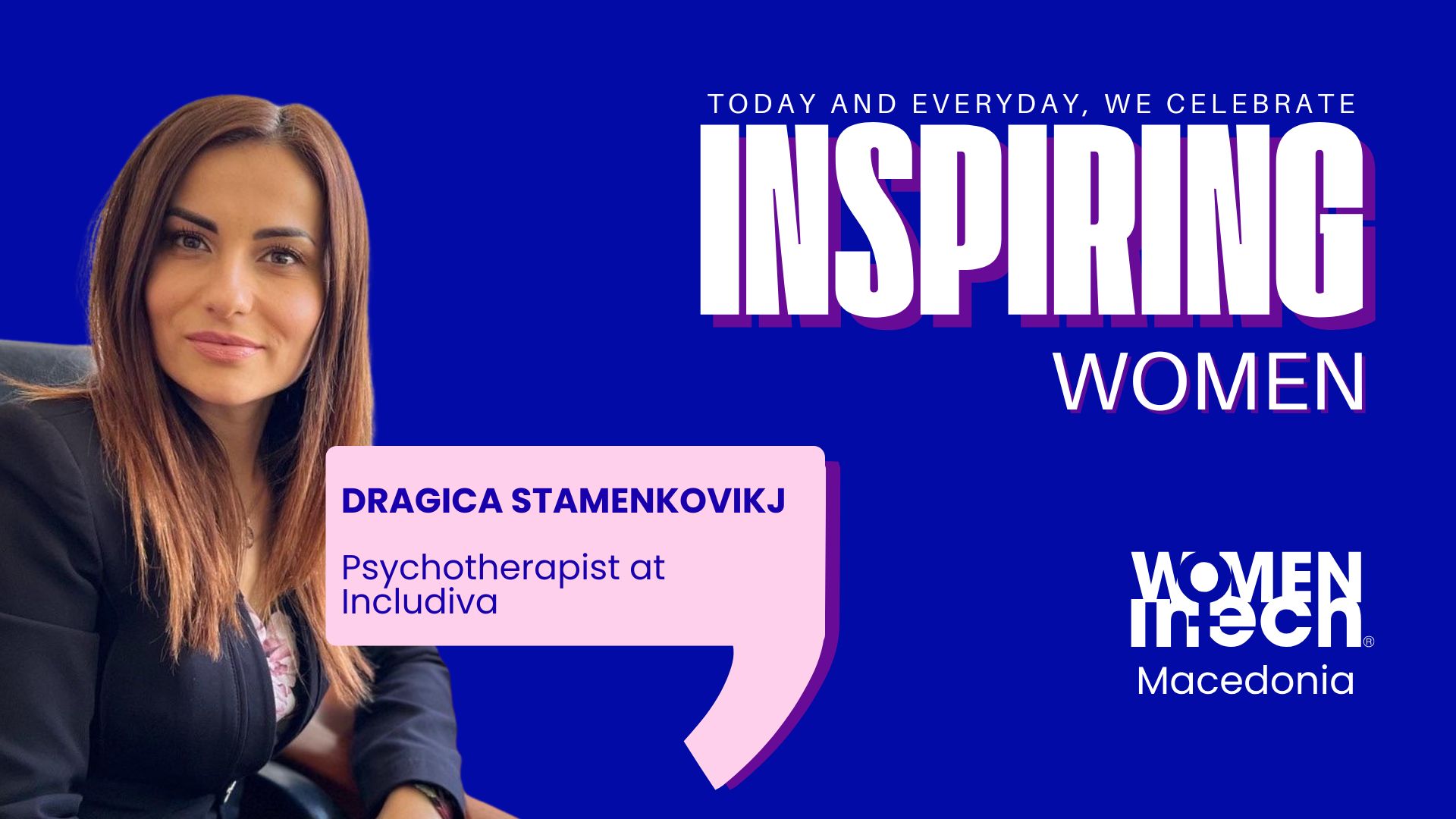
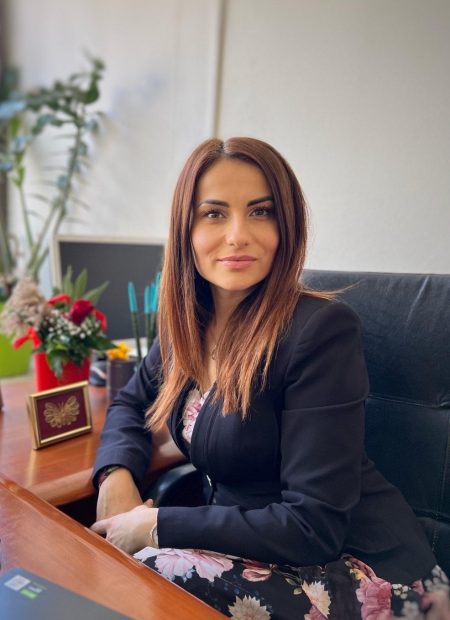
Dragica Stamenkovikj is a Psychotherapist with over 10 years of experience at Includiva, based in Kumanovo and Skopje. Her journey from banking management to psychotherapy has positioned her at the intersection of psychology and technology, where she focuses on human-centered design and how technology can better serve people’s real needs.
When Systems Meet Human Experience
My path wasn’t linear. I started in banking and grew into a managerial role, where I learned how systems operate and what it means to lead people within them. I was focused on processes, efficiency, making sure everything ran smoothly. But I kept noticing something. People would get stuck. Not because they weren’t capable, but because something in the system itself was confusing or overwhelming.
That curiosity led me into psychology and psychotherapy. The more I studied, the more I recognized the same patterns. Clients and employees alike would struggle with processes that were meant to be simple. Back then, I thought it was an operational issue. Now I understand it was a design problem.
That realization shifted everything. I didn’t want to just support people within systems anymore. I wanted to help shape better ones. That’s how I found my place at the intersection of psychology and technology.

When I think about success, it’s never been about one thing. For me, it’s learning and impact, because they’re so connected. Learning keeps me evolving. It pushes me to question my assumptions, stay curious, and adapt. But learning on its own isn’t enough. What really matters is whether that learning translates into something tangible. Did something improve because I was there? Did a system become clearer, more human, more effective? Coming from both psychology and banking, I’ve seen how much difference well-designed systems can make. So success isn’t just growth for myself. It’s growth that creates better outcomes for others.
There was a period when I stepped into a higher-responsibility role, and I remember having a strong sense of “I’m not sure I’m the right person for this.” Instead of trying to ignore it, I did something that comes from my background in psychotherapy. I treated that voice as something to have a conversation with, not something to silence.
I asked myself: What exactly are you worried about? What do you think will happen? When I broke it down, it wasn’t incompetence. It was fear of making mistakes in a visible role. That shift helped me separate fear from facts. From there, I focused on what I could control. Preparing well, asking the right questions, making one decision at a time. The voice didn’t disappear completely, but it became quieter. More importantly, it stopped driving my actions. I moved forward anyway, and that experience taught me that confidence often follows action, not the other way around.




Looking forward, if I had to bet on one thing, I’d bet on human-centered AI. The real shift isn’t just in what AI can do technically, but in how it’s integrated into people’s everyday experiences. The gap I keep seeing is between powerful technology and how humans actually understand, trust, and use it. That’s where psychology becomes so important. How people make decisions, how they respond to automation, where they feel resistance or trust. Those factors will determine which AI products succeed. The people who can bridge that space will be the ones who matter most in the next five years. That’s what gets me excited about where I am now and where this field is going.
One thing I’ve learned is the importance of boundaries. For me, it’s family time. That’s the one boundary I don’t compromise on. Not because it sounds like the “right” answer, but because I’ve learned how much people need a place where they don’t have to perform, decide, or carry responsibility all the time.
Work can be intense, especially when you care about what you do. You’re constantly thinking, solving, and giving. Family time is where I step out of that role and be present without pressure, without expectations. It grounds me. It reminds me of what actually matters beyond deadlines and results. And it makes me better at my work. When that part of my life is protected, I show up more focused, more patient, and more human.
I’ve learned to pause before reacting to every request or task. Instead of jumping in right away, I ask myself, Is this important, or is it just urgent? That small moment of reflection saves me a lot of time and helps me stay focused on what truly matters. Spotify has also become a simple way for me to reset between tasks and create small moments of focus and calm throughout the day. I enjoy listening to History Cast, How’s Work? with Esther Perel, and reading, a lot of reading, is something that always keeps me grounded.
To the girls in Macedonia, and everywhere else, I want you to know this:
It’s okay to doubt yourself sometimes. That doesn’t mean you’re not capable. Keep going anyway. The path becomes clearer as you walk it.