
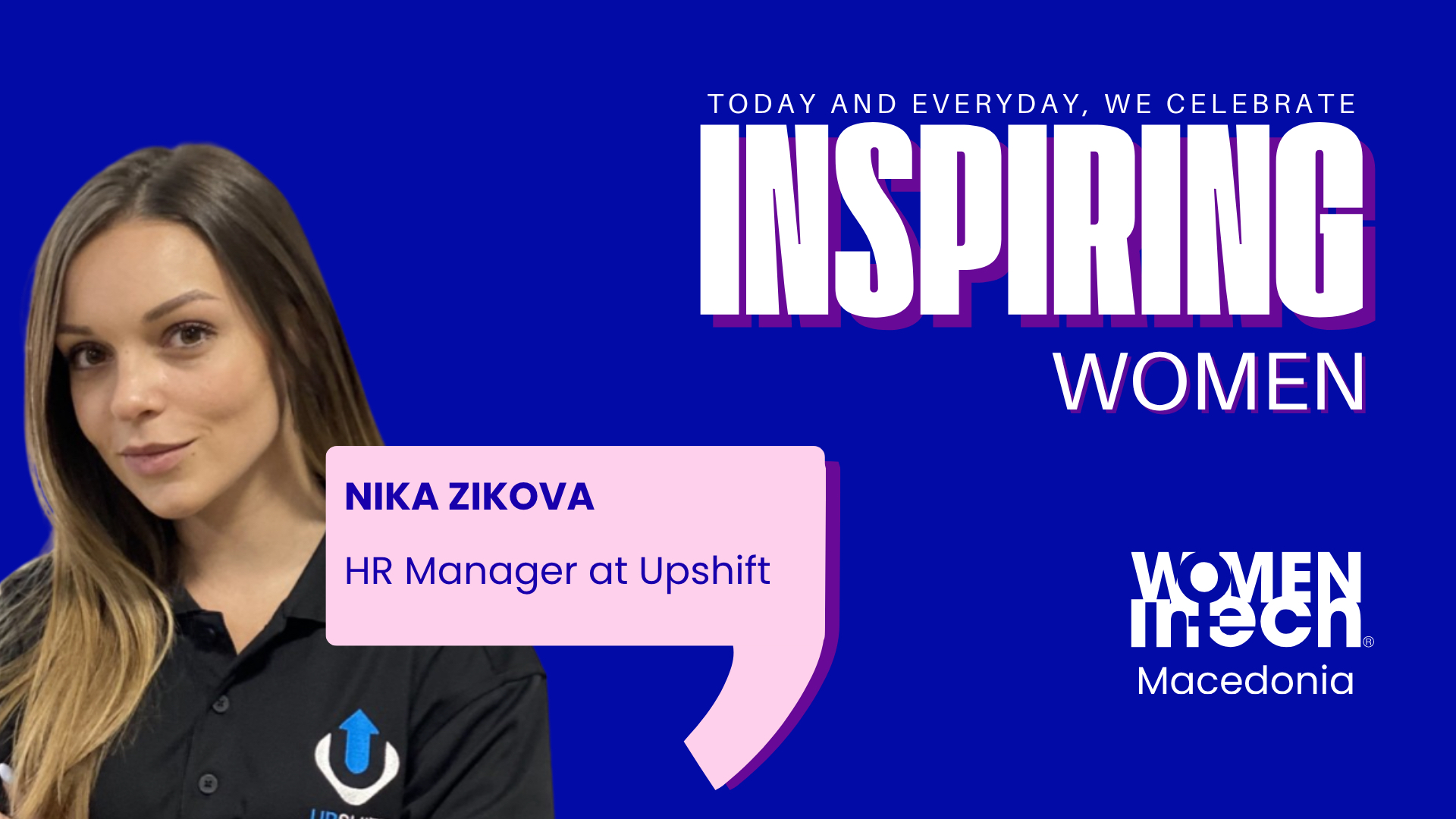
100 Interviews. One Month. One Global Mission.
This March, Women in Tech Macedonia launches 100 Interviews, a global storytelling initiative dedicated to amplifying the voices of women shaping technology across industries and borders.
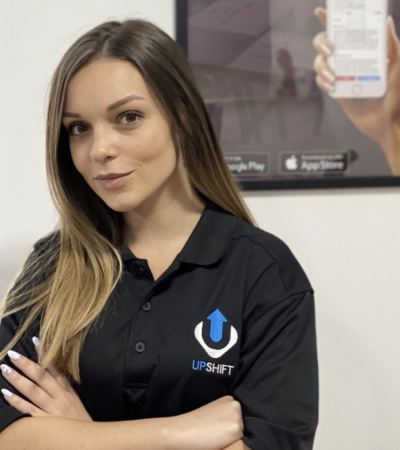
Meet Nika Zikova, an HR Manager at Upshift with eight years of experience bridging human resources and technology. Based in North Macedonia, Nika has carved out a unique space in HR-tech, proving you don’t need to code to belong in the tech world. Her journey shows how curiosity and adaptability can transform traditional fields through technology.
Bridging Empathy and Efficiency in HR-Tech
My journey into tech didn’t start with a computer science degree or a coding bootcamp. It started with frustration.
Fresh out of university, I was applying for my first HR role and experiencing the hiring process from the other side. What struck me most was how outdated everything felt. Candidates would apply and then… silence. No updates, no communication, just a black hole of uncertainty. It didn’t matter if you got the job or not. The lack of basic courtesy was stunning.
That frustration became my “Aha!” moment. I started asking uncomfortable questions. Why do traditional HR departments work this way? Why do we accept processes that treat candidates like numbers instead of people? I realized I didn’t want to be the kind of HR professional who perpetuated these broken systems. I wanted to be part of fixing them.
To me, tech is a mindset. It’s curiosity, experimentation, and continuous learning. It’s refusing to accept “that’s how we’ve always done it” as an answer. I saw this massive opportunity to use technology not to replace the human element in HR, but to remove the friction from it. That’s where I found my place in HR-tech, designing processes that are streamlined, powered by smart tools, and respectful of people’s time, effort, and potential.

Of course, finding my place and actually feeling qualified to be there were two very different things. My imposter syndrome hit hardest when I joined Upshift, my first product-based tech startup. On day one, I was responsible for hiring developers. There was just one small problem. I didn’t know the difference between front-end and back-end development.
I remember my manager checking in on my second day, asking how I was doing. I told him, “Thank god, so much better than yesterday!” That’s how overwhelmed I felt. But instead of faking it or hiding my confusion, I asked for help. My manager literally drew diagrams on a whiteboard to explain our system architecture and what a database is. It was humbling, but it was exactly what I needed.
That experience taught me something important. You don’t need to know everything to belong in a new field. You just need to be curious and willing to ask questions. As long as you approach unfamiliar territory with genuine interest, you can learn anything. The developers I work with don’t expect me to code. They expect me to understand their needs, communicate effectively, and design hiring processes that bring in the right people. And I can do that because I’m not afraid to learn.
Working in a startup showed me what success really looks like. For me, it’s impact. It’s seeing a process become faster or a team become stronger because of something we built together. Success isn’t about checking off a to-do list. It’s about looking back and knowing your work made a real difference.
That’s why I’m so excited about where HR is heading. AI is reshaping how we work. Outdated models will disappear, and the winners will be HR professionals who embrace these tools instead of resisting them. We’re at a point where technology can finally help us do what HR should have always been doing: treating candidates and employees like humans while operating with efficiency and fairness.
I’ve learned to protect what matters most to me outside of work too. My non-negotiables are family time and physical health. I make sure to spend quality time with my one-year-old son, and I keep up my routine of functional training two to three times a week. These boundaries aren’t luxuries. They’re what keep me energized and focused in my work.
My productivity hacks are simple. Eat the frog first thing. And if something takes less than two minutes, I do it immediately. These small habits create momentum that carries through the entire day.
To the girls in Macedonia, and everywhere else, I want you to know this:
Always go the extra mile. It’s never crowded there.