
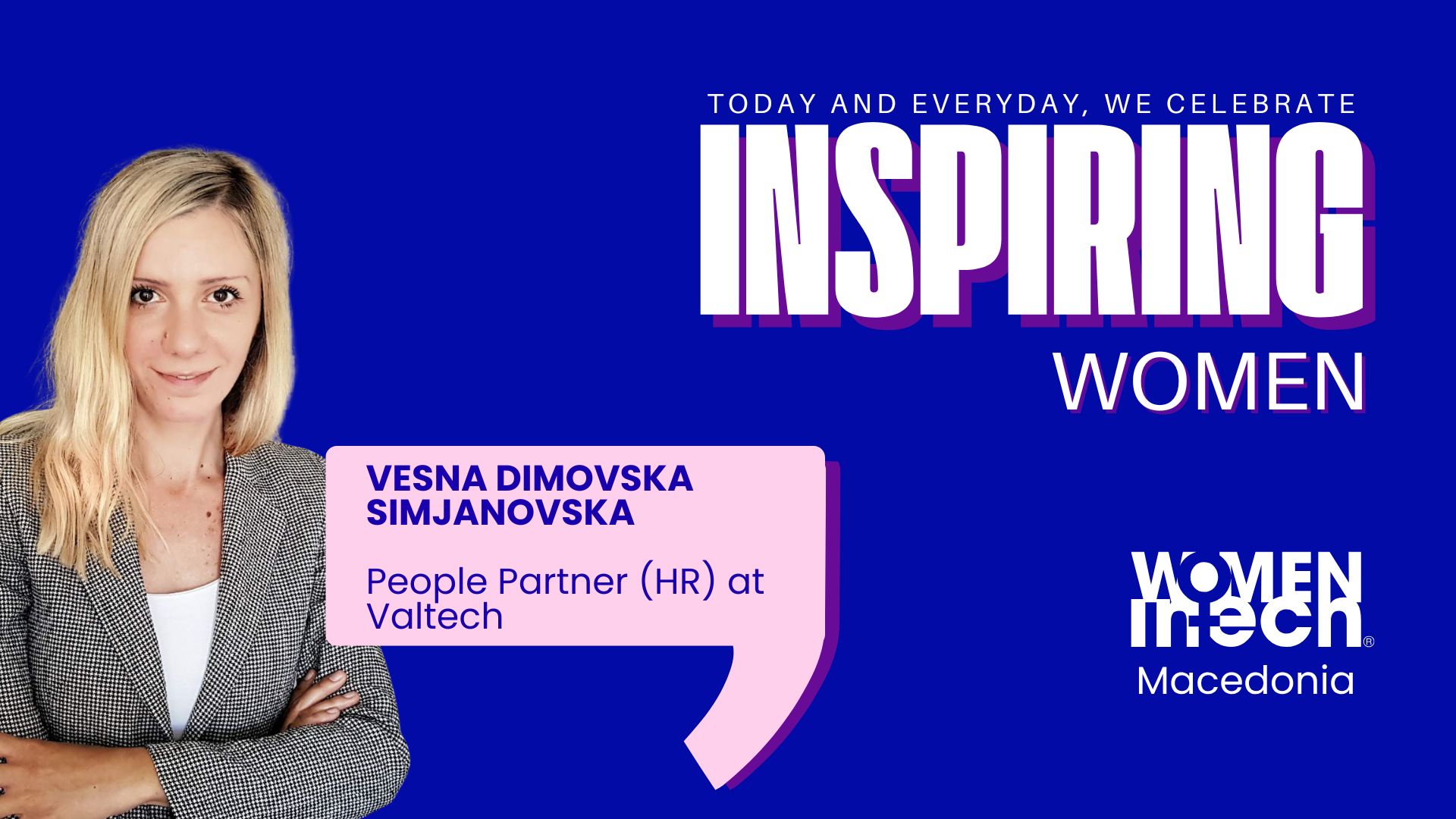
100 Interviews. One Month. One Global Mission.
This March, Women in Tech Macedonia launches 100 Interviews, a global storytelling initiative dedicated to amplifying the voices of women shaping technology across industries and borders.
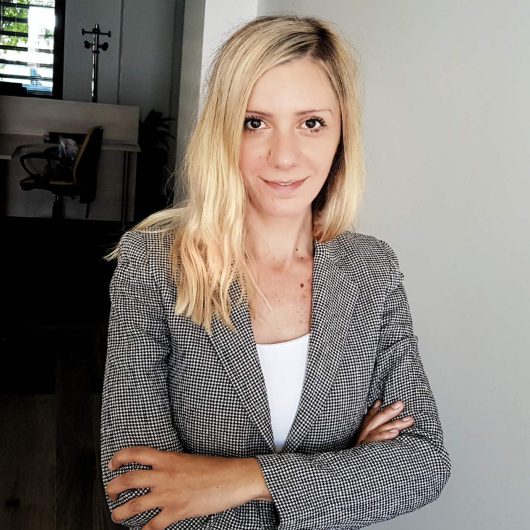
Meet Vesna Dimovska Simjanovska, a People Partner at Valtech in Skopje with over 18 years of HR experience in tech. Her career has taught her something most people miss: the real power isn’t in the code itself, but in the people who write it.
Debugging People Problems with the Same Rigor as Code
There was a moment early in my career when everything clicked. I was watching a team recover from what seemed like an impossible setback. The tech hadn’t changed. The product specs were the same. But something about how the people worked together shifted, and suddenly they were moving at a different speed entirely.
That’s when I realized: tech isn’t just about the task at hand, the skills, the project, or the product. It’s about people’s capacity to adapt and learn, and grow constantly. Seeing the team’s velocity improve because of a “people fix” made me understand where I belonged. I belong in People Operations in tech. It’s the perfect environment where I can build the “people seen and heard” factor, not only focusing on code but on the human behind it, creating structured, data-driven processes that allow creators to do their best work.
I came to this work through an unconventional path. During my master’s studies in HR Management, I was working at a small consultancy company. We were ambitious, maybe too ambitious. We tried to do everything at once: creating and delivering soft skills training, building a non-formal HR Academy from scratch, managing recruitment projects for big clients, publishing an HR magazine, and running a mentoring program for interns. All of this with one small team. All of this while I was still learning.

Being on several fronts at the same time, holding several positions while being at the beginning of my career, taught me something I carry with me today. You can be successful, not perfect, but humble, and achieve meaningful impact. But only if you really love what you do. Only if you rely on consistency and professionalism. Only if you’re open to learning and feedback from everyone and create authentic, trusted relationships.
Now, when I think about what defines success in my career, I keep coming back to one thing. In tech terms: high-performing code requires high-performing team dynamics. In professional and private life, we’re all part of collective teams, and I’m a true team player. Teams need structure, agreed-upon rules and expectations, an end goal, and a shared understanding of cultural values and success.
What I’ve learned is that people’s problems can be diagnosed and “debugged” with the same rigor as software. When you move away from static management toward iterative development of your people, you empower everyone to contribute not just to the repository but to a culture of collective excellence and rapid adaptation. The one metric that defines success for me is fostering a high-accountability culture with radical transparency and frequent data-driven retrospectives. But here’s the thing about working in people operations in tech: you’re constantly dealing with complexity. You’re helping people through change, through growth, through difficult conversations. And you can’t do that well if you’re running on empty.

Family and friends are my non-negotiables. That space recharges me, inspires me, keeps me grounded. It nurtures my deep, emotionally constructive self-consciousness. I need my “battery recharge” to sustain my professional superpower: approaching complex human and organizational problems with a clear head, empathy, and perspective. It’s that balance that allows me to be a trusted, authentic advocate for our people and a real partner to our leaders, the “calm in the storm”.
What I can recommend to everyone is my favourite book, “Emotional Intelligence”- Why It Can Matter More Than IQ by Daniel Goleman. It is an “oldie but goldie” that still holds great value today, reminding us that understanding emotions, building empathy, and connecting with others are skills we need now more than ever. Looking ahead, I’m betting on AI. But with due respect, it should be a co-pilot to human activity, a helping hand, and heavily tested. It should be used with rational and emotional critical thinking. As we embrace new tools, we must not lose sight of the human element.
My advice to anyone starting? Ask questions. Always ask why and how. Mark your “milestones”! Address and acknowledge mistakes, learn from them. Address weaknesses inside and outside and try to provide solutions. Discuss openly and transparently. Share and help. Collaborate and inspire. Be inspired and know that growth is happening all the time. It’s a “work in progress”, a process that never ends.
To the girls in Macedonia, and everywhere else, I want you to know this:
Ask questions, read professional literature and researches, explore possibilities, and consider different perspectives. Know your “powers” and believe in yourself!