
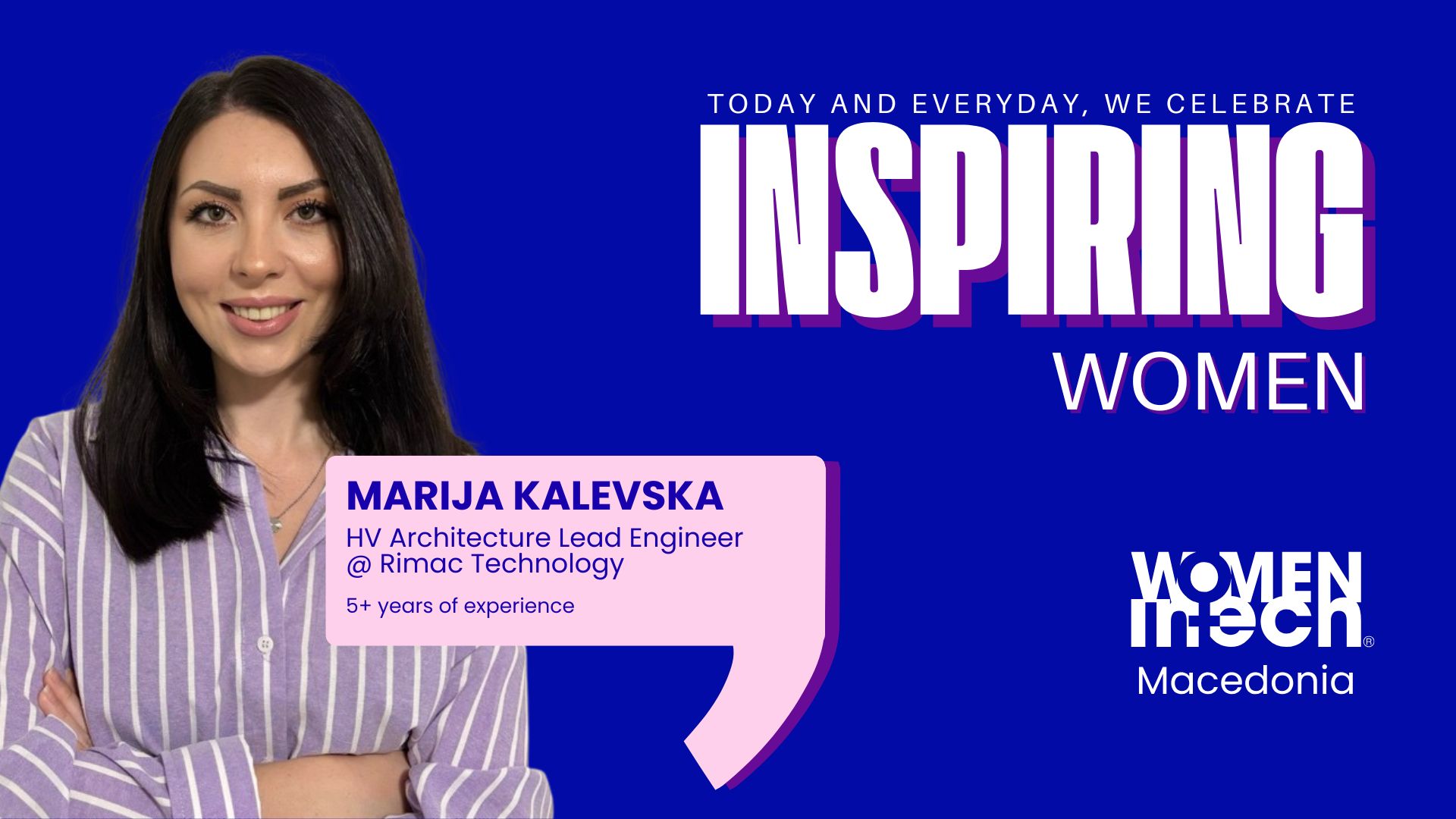
100 Interviews. One Month. One Global Mission.
This March, Women in Tech Macedonia launches 100 Interviews, a global storytelling initiative dedicated to amplifying the voices of women shaping technology across industries and borders.
In this interview, we share the story of Marija Kalevska, HV Architecture Lead Engineer at Rimac Technology, based in Zagreb, Croatia. With over 5 years of experience in high-voltage systems and complex engineering environments, Marija’s path into tech is defined by curiosity, structure and a deep respect for long-term, sustainable growth.
Curiosity, Discipline, and the Power of Getting One Percent Better
I have always been drawn to complexity. Even early on, I noticed that while many people were satisfied once something worked, I felt most alive when I understood why it worked. I wanted to know what was happening beneath the surface, how the pieces connected and what would break if one part changed.
That curiosity never felt accidental to me. It felt like a pull. Over time, I realized that this way of thinking was not overanalyzing or slowing things down. It was the foundation of good engineering. Understanding interactions, anticipating consequences and seeing the bigger picture is what makes complex systems manageable, and it is what continues to guide how I approach my work today.
Success, for me, has never been about a single milestone or title. I see it as growth paired with impact. I measure it in progress, even when that progress is small and quiet. Getting a little better every day matters because those small improvements compound over time.
One of the most meaningful aspects of my role has been mentoring junior colleagues. Watching someone gain confidence, clarity, and ownership reminds me that success is not only about what you build, but also about who you help grow along the way.
More recently, as I have become involved in strategic discussions, seeing the tangible impact of my work on larger decisions has added another layer of fulfillment. At the same time, I have learned that ambition without balance is not sustainable. Growth requires energy, and energy must be protected.

Imposter syndrome still shows up from time to time. I tend to be my own harshest critic, questioning whether I am doing enough or doing things the right way.
When doubt surfaces, I rely on evidence. I keep track of achievements, progress and feedback, not to seek validation, but to remind myself of facts. Facts have a way of grounding emotions.
Routine also plays a critical role. Daily self-improvement, even in small steps, keeps growth visible and tangible. I also make it a habit to define what I want to focus on next. Having direction turns uncertainty into action and helps quiet the internal noise.
Protecting my energy has become a non-negotiable part of my life. Fitness, healthy eating, and maintaining an organized home are not just habits. They create structure, clarity, and calm.
When my environment is in order and my body feels strong, I can think more clearly and show up fully at work and in my relationships. I have learned that discipline outside of work supports creativity and focus within it.
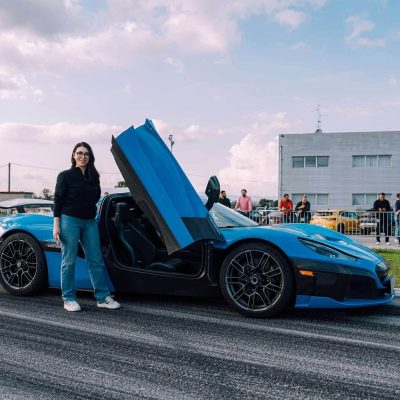

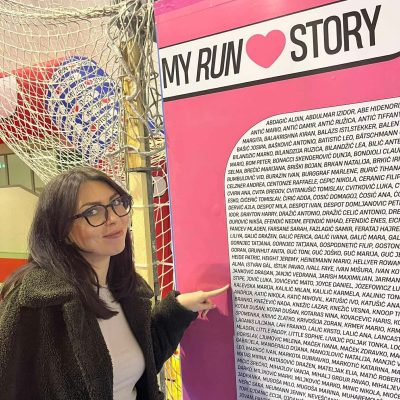
Outside of engineering, I recharge through movement and reflection. Running with my husband gives me space to think and reset. Reading and watching meaningful films allow me to step outside my own perspective and see the world differently.
I also draw inspiration from The Diary of a CEO podcast, which offers honest conversations about leadership, growth, and vulnerability, and from Start with Why by Simon Sinek, which continually reinforces the importance of purpose over pressure. These sources remind me that clarity and intention matter just as much as technical skill.
At Rimac, my work requires precision, foresight, and deep focus. Designing and guiding high-voltage systems means thinking several steps ahead and understanding the consequences of every decision.
That is why time-blocked sessions for deep work are sacred to me. Deep thinking cannot happen in constant motion. Those uninterrupted blocks are where real progress is made, where complexity becomes structured and solutions take shape.
Looking ahead, I am excited about the role of AI in problem-solving and productivity. The real advantage will not come from using AI blindly, but from understanding its potential and its limits.
To the girls in Macedonia, and everywhere else, I want you to know this:
Your skills in technology can change the world. Don’t doubt yourself or wait for validation. Dive in, learn, experiment, and let your solutions make an impact.