

100 Interviews. One Month. One Global Mission.
This March, Women in Tech Macedonia launches 100 Interviews, a global storytelling initiative dedicated to amplifying the voices of women shaping technology across industries and borders.
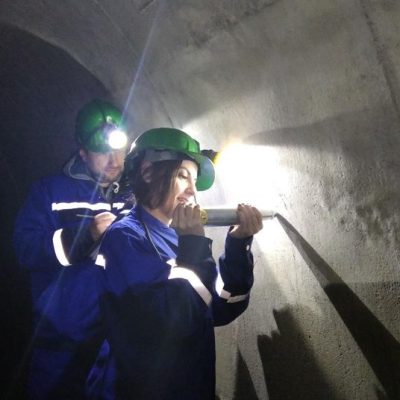
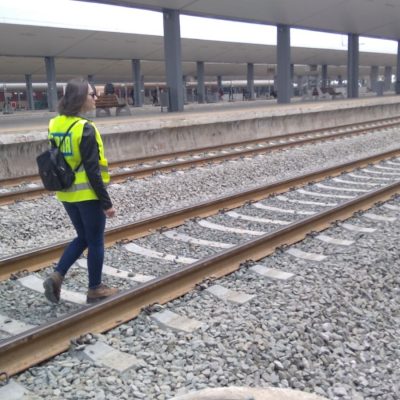
We continue this campaign with Ivona Nedevska Trajkova, a civil engineer and PhD candidate in Transport Infrastructure at the Faculty of Civil Engineering, Ss. Cyril and Methodius University in Skopje. She works as a Teaching and Research Assistant, with over 10 years of academic and professional experience in railway engineering and infrastructure management. Her work focuses on railway infrastructure analysis, track geometry degradation, maintenance optimization, and data-driven, machine-learning-based models that support performance-based maintenance strategies.
Engineering Meets Data
My “aha” moment came when my work moved from classical railway engineering into analyzing real track geometry data collected over multiple inspection campaigns. I was working with measurements from track recording vehicles, parameters like alignment, level, gauge and derived indicators such as the Track Quality Index (TQI). What initially seemed like standard engineering data quickly turned into a complex data challenge: large datasets, inconsistencies, missing values and maintenance interventions between measurements. I wrote code to clean, align and segment the data, derive degradation rates and model how track quality changes over time. The turning point was realizing that these models directly influenced real decisions, maintenance prioritization, intervention timing and resource allocation. At that moment, I understood that I belong in tech: using data and models to support safer, more efficient infrastructure in the real world. I define success through real-world implementation.
For me, research or design work matters only when it becomes part of actual infrastructure decisions. Success means that an analysis influences how a railway section is maintained, that a model supports prioritization of interventions, or that a design solution is incorporated into feasibility studies, tender documentation, or executed projects. In my work, data analysis and modeling are translated into actionable outputs: identifying critical sections, estimating degradation rates, evaluating the long-term effect of maintenance and supporting decisions on when and where interventions should be performed. These results are meant for infrastructure managers, not just for publication.
Publications and titles are important, but they follow implementation. If a railway section operates more safely and efficiently 10–20 years from now because of work I contributed to, that is how I define success.

My non-negotiable is dedicated family time, especially time spent with my child. I set clear boundaries to ensure availability outside working hours and to maintain a sustainable balance between professional responsibilities and personal life. This structure allows me to work with focus, consistency, and long-term reliability, without burnout or reduced performance.
I experienced impostor syndrome when I first started working with large-scale railway track geometry datasets and advanced modeling methods that were not traditionally part of classical civil engineering. I was expected to handle data preprocessing, write analysis scripts, select appropriate models, and justify the results to both academic and industry professionals. I addressed this by focusing on the problem, not on how I compared to others. I broke the task into clear steps: data cleaning, validation against engineering rules, model development, and interpretation grounded in physical infrastructure behavior. Instead of trying to “sound technical,” I validated every result against real track conditions and maintenance records.
What silenced the impostor voice was implementation. When the results aligned with field observations and were accepted by infrastructure professionals as usable inputs for decision-making, it confirmed that competence is demonstrated through outcomes, not titles.

If I could leave one message, it would be this: do not wait until you feel “ready.” Start working on real problems early, even when you do not know all the tools yet. Skills can be learned quickly, judgment, confidence, and technical maturity are built only through real projects and responsibility.
If I had to bet on one trend, it would be data-driven asset management powered by machine learning and digital twins for infrastructure systems. In railway engineering, the integration of long-term monitoring data, predictive models and decision-support tools will define how maintenance, safety and investment planning are handled over the next five years. The future of the field lies in combining engineering knowledge with automated analysis and predictive technologies to move from reactive maintenance to optimized, performance-based management.
My productivity approach is working in focused blocks with one clear objective, and stopping as soon as the objective is completed – no multitasking, no unnecessary optimization.
The app I can’t live without is Google Calendar. I use it to plan long-term research milestones, teaching obligations and personal commitments in one place, so deadlines are realistic and nothing critical is left to chance. The best podcast I’ve recommended lately is EngineerCast, created by one of my former students. It focuses on promoting civil engineering, real engineering careers, and honest conversations about what it means to work in the field today. I value it because it presents engineering in a realistic and accessible way and encourages young people to see civil engineering as a modern and relevant profession.
When I’m not online, I’m spending time with my family, being present with my child, going for long walks, and intentionally staying away from social media to make space for real conversations, rest, and everyday life.
To the girls in Macedonia, and everywhere else, I want you to know this:
You don’t need to look a certain way, act a certain way, or follow a predefined path to belong in tech. I didn’t.
What matters is curiosity, persistence, and the willingness to take responsibility for real problems. If you enjoy building, analyzing, improving, and learning along the way, you already have what it takes, even if it doesn’t feel like it yet.