
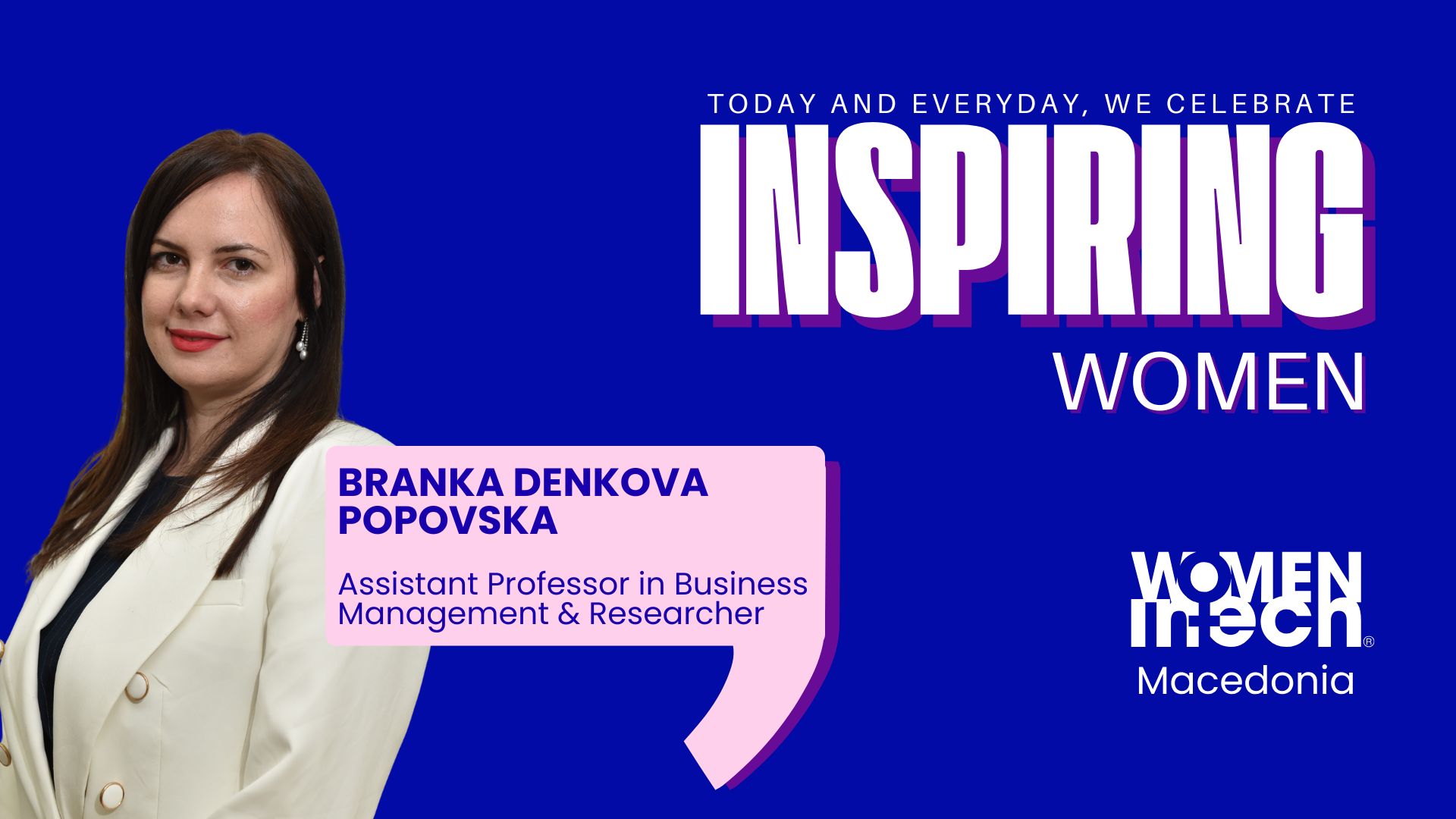
100 Interviews. One Month. One Global Mission.
This March, Women in Tech Macedonia launches 100 Interviews, a global storytelling initiative dedicated to amplifying the voices of women shaping technology across industries and borders.
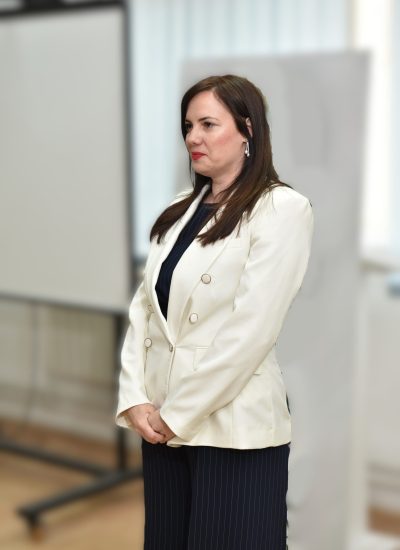
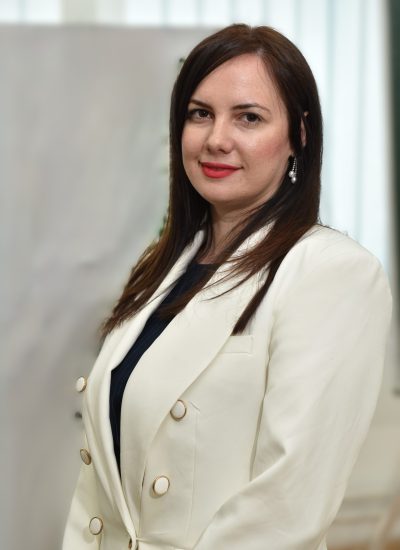
Meet Branka Denkova Popovska, an Assistant Professor in Business Management and Researcher from Skopje, North Macedonia, with over four years of experience as a Higher Education Consultant. Branka’s story is about discovering that technology isn’t just something to teach about, it’s a tool to solve real problems and transform how we prepare the next generation for a rapidly changing world.
When Teaching Becomes Innovation
I didn’t have a lightbulb moment in a classroom or during some formal training. My turning point came when I was sitting at my desk, frustrated with a project I was designing for my students. I wanted it to be simple, not time consuming, and actually motivating enough that they’d want to complete it. At the same time, I was drowning in research, trying to keep up with a field that seemed to expand every week.
That’s when something clicked. I stopped thinking of technology as just another topic to cover and started using it to solve the actual problems in front of me. I used it to organize information into clear learning goals, pulled in case studies that made abstract concepts suddenly relevant, and automated repetitive tasks like scheduling so I could focus on what actually mattered: the teaching itself.
The biggest shift was personalization. Technology let me adapt content and pacing to different students in ways that felt genuinely impactful. I could reach more students more effectively without burning out. That’s when it hit me. I wasn’t just teaching about digital innovation anymore. I was actively using technology to design solutions and create better learning experiences.

For me, success isn’t measured in publications or promotions. It’s measured by the impact I have on my students. What keeps me going is knowing that I’m directly shaping how young people think, grow, and prepare for their futures. I’m helping them build confidence, curiosity, and the ability to adapt. We’re living in a world where technology evolves constantly. My role is to help students stay relevant, not by memorizing today’s tools, but by developing the mindset to learn, unlearn, and innovate. If my students leave more prepared and confident to navigate change, that’s success.
When I stepped into a dual role as both director and lecturer, I felt completely overwhelmed. The pressure of managing programs, leading teams, and continuing my teaching and research created real doubt. Was I actually qualified to handle all of this? I overcame it by embracing the challenge instead of fighting it. I built systems. I prioritized ruthlessly, focusing on what truly mattered and letting go of what didn’t. Most importantly, I learned to trust my own capabilities and lead with intention rather than fear. That experience shaped my leadership approach completely. Now I lead with resilience, adaptability, and continuous learning.
Outside of work, I’m fiercely protective of one thing: being fully present with my children. Time passes so quickly, and the moments we share each day are irreplaceable. Childhood is made up of small, ordinary experiences that become the memories that matter, and I want to be there for them. Not distracted by my phone or thinking about work, but genuinely engaged. I’m very intentional about protecting this time because I know it cannot be regained later.
Looking ahead, if I had to bet on one technology dominating the next five years, it’s AI. From an academic perspective, AI is already reshaping how we teach, learn, and conduct research. It’s enabling personalized learning experiences, data driven decision making, and entirely new forms of knowledge creation. What excites me most is how AI bridges multiple disciplines. Whether I’m in the classroom or advancing research in business, AI is becoming indispensable. It’s not replacing human expertise, it’s amplifying what we can do. I genuinely believe it will continue to redefine how we work, learn, and innovate.
My advice to young women considering tech? Don’t be afraid to start, experiment, or fail. Every step you take teaches you something valuable. Trust your curiosity, follow your ideas, and believe that you can shape the future.
To the girls in Macedonia, and everywhere else, I want you to know this:
Lead with courage, take risks, and be authentic in everything you do. Your ideas matter, your voice matters, and your vision can change the world. Pursue it with confidence and passion.