
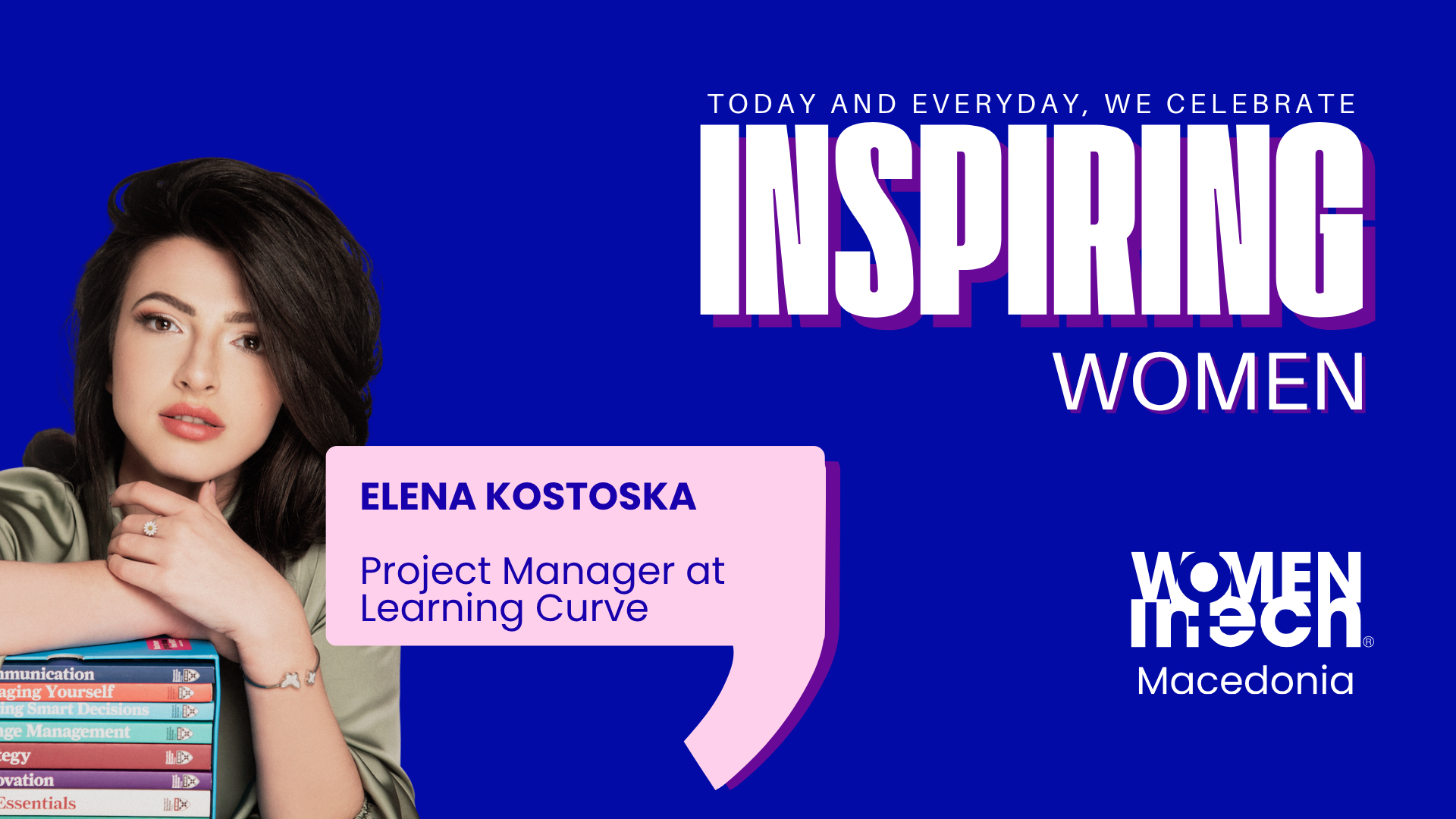
100 Interviews. One Month. One Global Mission.
This March, Women in Tech Macedonia launches 100 Interviews, a global storytelling initiative dedicated to amplifying the voices of women shaping technology across industries and borders.
Meet Elena Kostoska, a Project Manager at Learning Curve with over 10 years of experience in Skopje. As one of the youngest voices managing teams of 50 and supporting C-suite executives, Elena brings a refreshingly honest perspective on freedom, imposter syndrome, and the future of AI in project management.
You're Already in the Room
My real “aha” moment came when I started working on projects where technology was solving real problems and bringing ideas to life. I realized how much I loved that mix of creativity, structure, and impact, working with teams, products, users, and systems to make things better. One moment that stayed with me was working on technology designed to detect possible fires, especially in the period right after the Hawaii fires.
It made me realize that even if we do not save lives directly, the work we do in tech can still have a very real human impact. That is when it clicked for me that tech is not just about systems or architecture, but also about solving problems, building meaningful things, and creating value, and that is when I truly felt I belonged by doing good better with tech.
Success, for me, looks different than most people expect. It’s not about climbing a ladder or hitting a certain salary. It’s about freedom. Freedom over my time, my energy, and my direction. I want to choose where I work from, which projects I take on, which communities I contribute to, and how I shape my day, my month, my year. That autonomy matters more to me than any title ever could.

To protect that freedom, I’ve had to set some hard boundaries. The one thing I refuse to compromise on is my health. Staying active and eating well is something I refuse to compromise on, because I truly believe that if we want to age well and enjoy the life we’re building, we need to take care of ourselves now. There’s no real point in working hard and achieving things if we are too exhausted, unwell, or disconnected from our own bodies to actually enjoy them. That boundary feels sacred to me because it protects not just my present, but my future too. And reading. One book per week, no matter what.
Managing a team of 50 and supporting the C-suite at a young age came with both freedom and responsibility. I won’t lie, there were moments when I felt completely out of my depth. I kept wondering how I was supposed to support or advise people who had a decade more experience than I did. How do you hold authority when you’re one of the youngest people in the room?
I finally spoke with our VP of Marketing and asked for advice. She told me something that stuck: stop taking yourself out of rooms you’ve already been invited into. We do this to ourselves sometimes. We convince ourselves we’re not ready yet, when in reality, we wouldn’t have been given the opportunity if someone didn’t already see that we were capable. That conversation changed how I showed up. I stopped apologizing for my age and started trusting that I had earned my seat at the table.

Looking ahead, if I had to bet everything on one trend, I’d put it all on Agentic AI. Specifically, the shift it’s going to force in how project managers work. Right now, our job is about orchestrating people. Aligning teams, managing dependencies, unblocking progress. But in the next five years, I believe we’ll be managing a hybrid workforce of people and AI systems running in parallel.
Think about it practically. An AI agent that can autonomously track project status, flag risks before they escalate, draft communications, and hand off tasks to the next agent in a workflow. That’s not science fiction. That’s already beginning. The project managers who thrive won’t be the ones who resist this. They’ll be the ones who learn how to direct these systems with the same intentionality they bring to leading people.
The role isn’t disappearing. It’s expanding. The skill set shifts from purely human leadership to something closer to systems thinking at scale. You become the conductor of an orchestra where some of the musicians are human, and some are AI.
My productivity philosophy is simple. If it takes less than five minutes, do it right away. I block an hour of my day for something I actually look forward to. And if something isn’t going to matter in five years, I let it go. That last one has saved me more stress than anything else. Lately, I’ve been recommending Diary of a CEO and Nexus by Yuval Noah Harari for the way they challenge perspectives and spark deeper thinking. When I’m offline, you’ll most likely find me at the gym, hiking, cooking, reading, or simply enjoying good coffee somewhere in between it all.
To the girls in Macedonia, and everywhere else, I want you to know this:
No one is coming to save you. The bad news? You’re on your own. The good news? You’re on your own, and that means you can change the world just as much as anyone else. By having the courage to take the first step into rooms where you may feel like you don’t belong, you also open the door for others.