
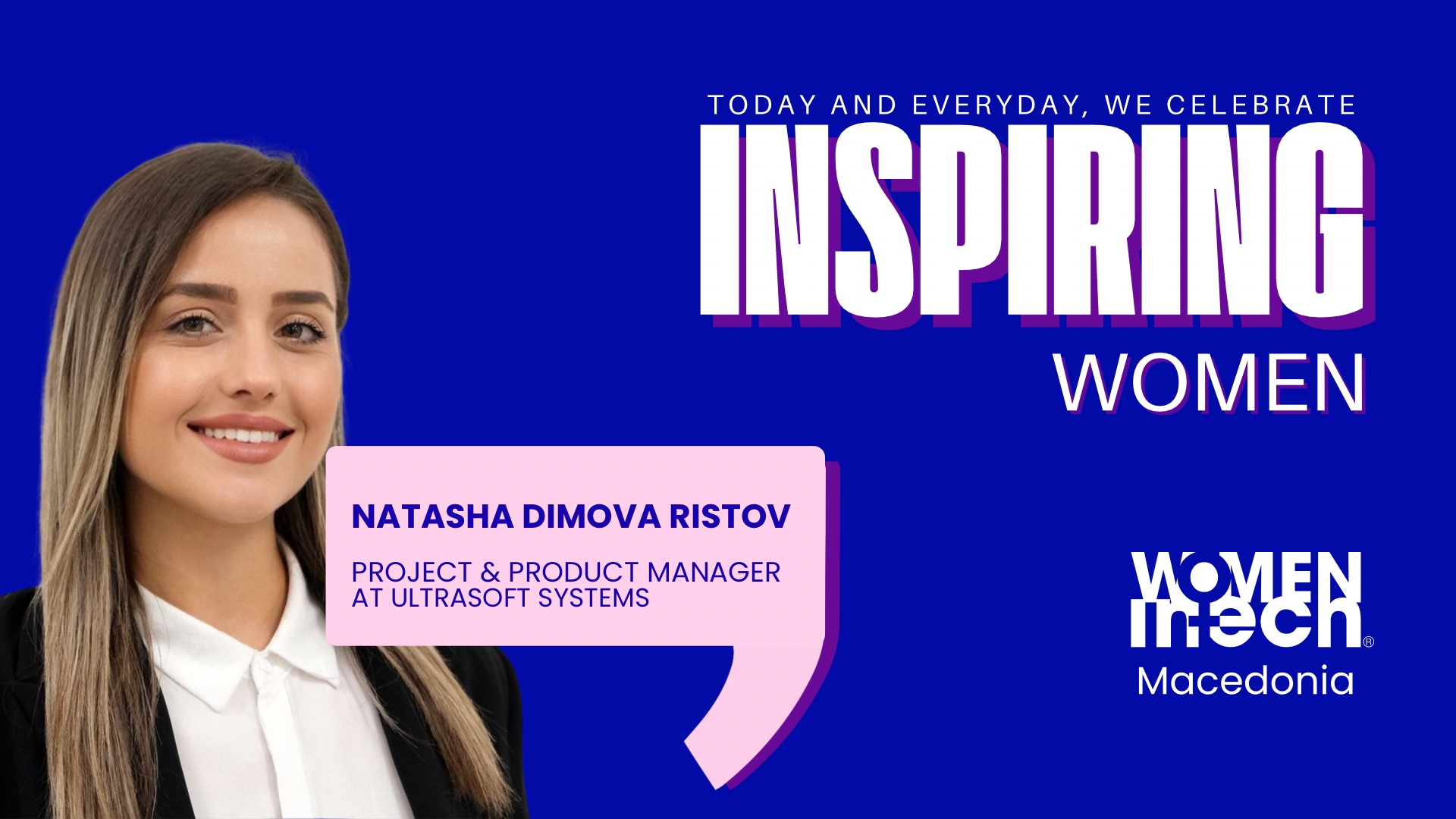
100 Interviews. One Month. One Global Mission.
This March, Women in Tech Macedonia launches 100 Interviews, a global storytelling initiative dedicated to amplifying the voices of women shaping technology across industries and borders.
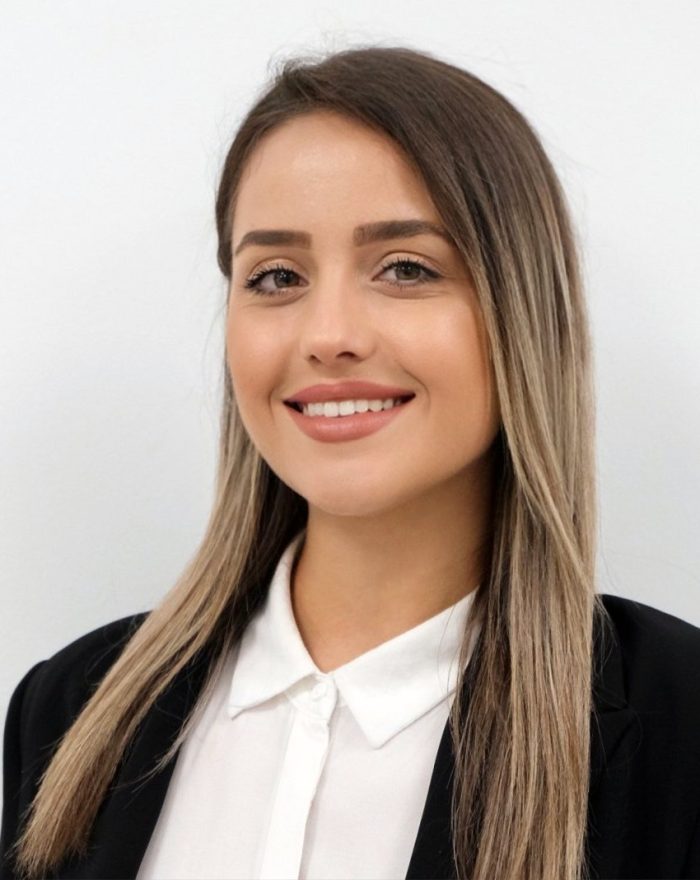
Meet Natasha Dimova Ristov, a Project & Product Manager at Ultrasoft Systems with 5 years of professional experience in Skopje. Combining a background in architecture with a career in technology, Natasha brings a unique perspective on innovation, continuous learning, and building solutions at the intersection of engineering, technology, and people.
From Architecture to Technology: A Project Manager’s Career Journey
My “Aha!” moment wasn’t a single class or project. It was a realization that unfolded over time.
After graduating from high school, I had to choose which faculty to attend. Since I had always loved both mathematics and art, I narrowed my options down to four: computer science, electrical engineering, architecture, and civil engineering. At the time, I chose architecture because I am a very creative person, and I believed it would allow me to express myself in the best way.
Looking back, what drew me to architecture was not buildings, but the act of creating. Ever since I was young, I was constantly making something new. I designed dresses and worked with my seamstress to bring them to life. I sketched cartoons and imagined how stories should continue. I drew portraits of my friends, designed my dream house, built physical models, and filled notebooks with ideas. Whether drawing, writing, designing, or building, I was always turning imagination into reality.
That was my first realization: I am a builder by nature, regardless of the medium.
I have always appreciated the original meaning of the word architect. Historically, architects were “master builders” who envisioned solutions and created blueprints for others to build. In many ways, I find the same principle reflected in software architecture, where systems are carefully designed before they are implemented.
My curiosity about technology started early. I got my first computer in 2007, when I was in fifth grade, and from that moment I was fascinated by computers and how they worked. Later, in high school, I was introduced to programming through C++, where I became familiar with programming syntax and basic programming concepts. At the time, however, I never imagined that I would eventually pursue a career in information technology.
The turning point came during my architecture studies. As a perfectionist, I was constantly striving to design something unique, something no one had imagined before. Alongside the design process, a question kept emerging: how can I generate more versions of an idea, and how can I reach the best solution faster?
I was never fully satisfied with just drawing. I wanted to improve the entire creative process. While working in AutoCAD, I often thought about which repetitive steps could be automated, so I could spend less time on manual work and more time exploring ideas.
Later, when I started learning Rhino, I was expected to move into Grasshopper, a visual programming tool. Instead, my curiosity took a different direction. I began exploring Python, teaching myself through YouTube, because I saw programming as another creative tool, something that doesn’t replace design, but removes limitations, speeds up iteration, and expands what is possible to create.
That was the moment it became clear to me that what truly excited me was not just designing, but using technology to expand creative possibilities. I did not want to create what everyone else was creating. I wanted to find better ways to create something original.
This is also when I understood that the engineer in me was always working alongside my creative side. I was not only interested in designing things, but also in improving them, whether it was functionality, structure, or the systems behind the design process.

Over time, especially after my master’s thesis, which involved a long period of research and development and was quite extensive for a typical master’s project, I came to another realization. What matters most is not how strong a design or technical solution is, but whether it ever becomes real.
During that process, I was deeply focused on developing the work itself, without thinking much about how it would be received outside that environment. When it came time to share it more openly, I felt hesitation, not because I doubted the quality, but because I was stepping out of a space where I felt fully in control.
This shifted my focus toward everything required to turn ideas into execution: communication, collaboration, stakeholder alignment, decision-making, and leadership. Without planning it consciously, I found myself becoming the person who connects people, aligns goals, and helps move projects forward.
That was when I realized I do not just belong in technology. I belong at the intersection of technology, engineering, and people. I enjoy building solutions, improving processes, and turning ambitious ideas into real-world results. Looking back, every step of my journey was pointing me toward technology. I just had not recognized it yet.
For me, success is having confidence in what I do and the ability to stand behind it. More importantly, it is knowing that my work or story can positively impact even one person, helping them feel more confident, more motivated, or more willing to take a step forward.
That is also why I chose to share my own story, in the hope that it might help someone navigating uncertainty or transition. In that sense, success is not only about what I achieve, but also about what I can inspire in others.
My non-negotiable is family time. It is sacred to me because these are the people who truly make me happy and who I am responsible for. Career and status mean very little if there is no one to come home to after a long day. They are my motivation and my “why”, especially my daughter.
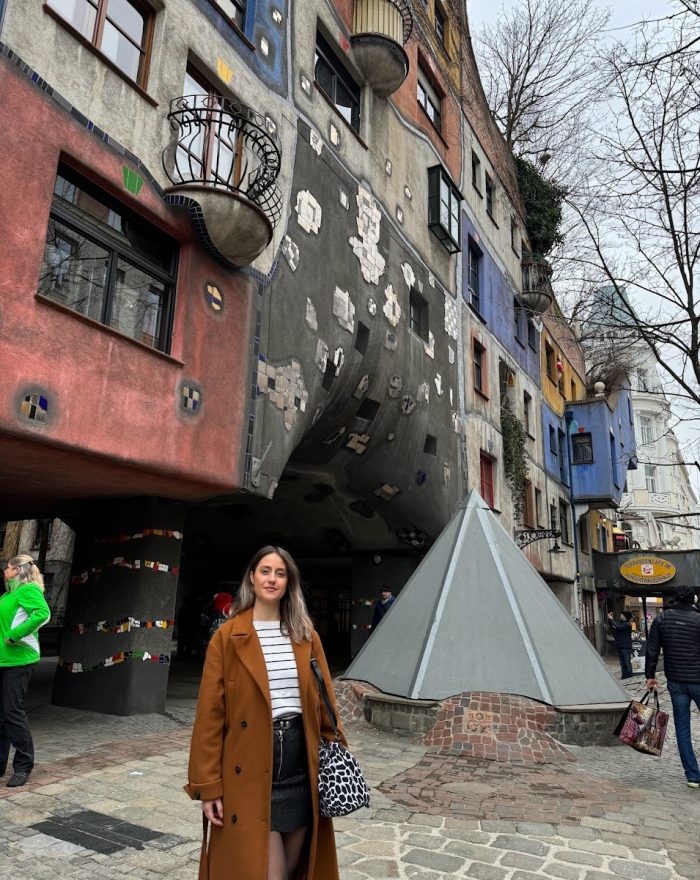
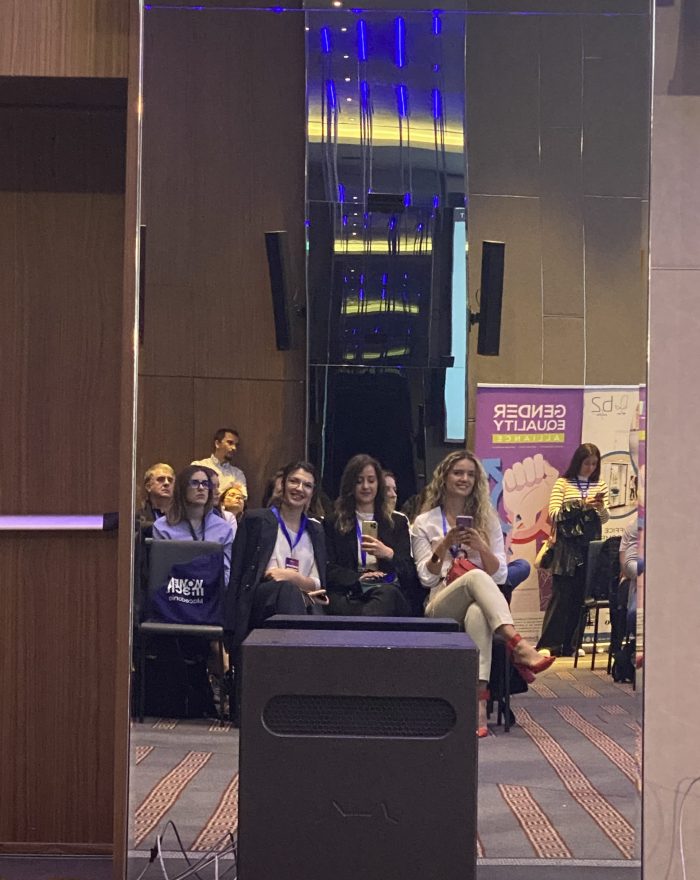
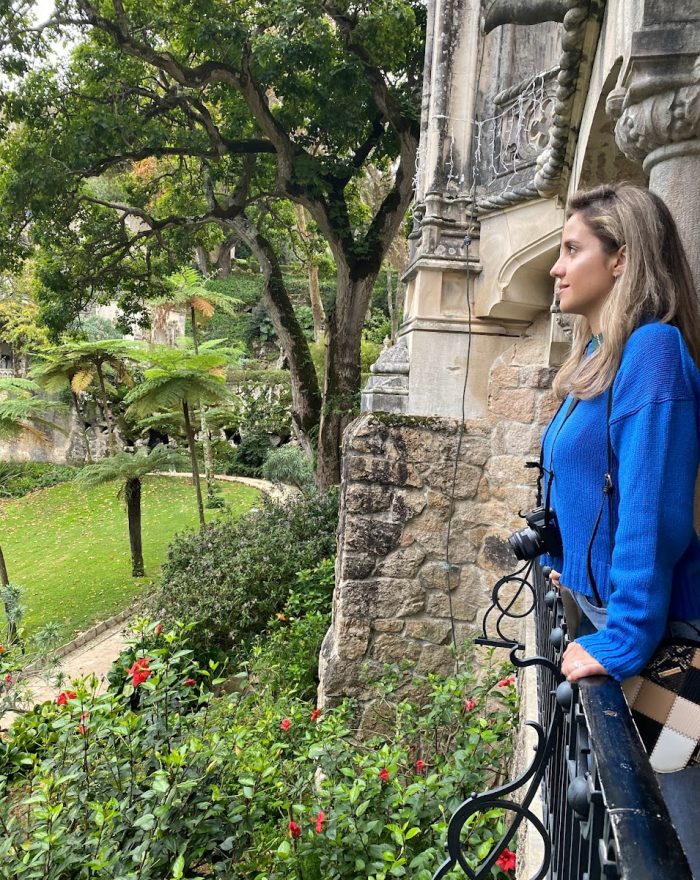
The last time I felt imposter syndrome was during this interview. It rarely appears when I am working, because experience gives me enough proof that I belong in that space. Instead, it tends to show up when I need to present myself more publicly.
That is why I initially questioned whether I was the right person for this interview. In the end, I reminded myself that I had been invited to this opportunity, and the only honest response was to show up and trust my experience.
If I could leave a sticky note on every young girl’s desk considering a tech path, it would say: If you can imagine it, you can learn to build it. Don’t let doubt stop you from starting.
I believe the future of project management will be shaped by AI, not because it will replace project managers, but because it will elevate them. It will take over repetitive and administrative tasks, creating more space for focus on strategy, decision-making, and people. The real advantage will belong to those who can combine human judgment with AI tools while keeping the human side of leadership at the center.
In my daily rhythm, I rely on simple habits that help me stay focused and creative. I start my day with my most important tasks before everything becomes busy, and use the quieter hours of the evening for learning and exploring new ideas. YouTube is my most used app, not only for learning but also for discovering new perspectives.
When I’m not online, I spend time with my family and close friends. We enjoy simple things together, walking in nature, traveling, or staying at home. That can mean reading a book, watching a movie, or playing games.
To the girls in Macedonia, and everywhere else, I want you to know this:
If you feel different, that is okay. It does not mean you need to change to fit in. Sometimes it simply means you have not yet found the place where you will truly flourish. Trust your curiosity, even if it leads you in unexpected directions. You do not have to follow the same path as everyone else. Your uniqueness is your strength, and one day it may become your greatest advantage.